
North Carolina Traffic Court Records
Traffic court records in North Carolina are public documents held by the Clerk of Superior Court in each of the state's 100 counties. These records cover traffic citations, moving violations, court dates, and case outcomes from courts across North Carolina. The state's eCourts system now offers digital access to many of these records. You can search traffic court records by name, citation number, or county. This guide explains how to find, search, and obtain traffic court records in North Carolina through the court system, the DMV, and other state resources.
North Carolina Traffic Court Records Quick Facts
Find NC Traffic Court Records
North Carolina runs a unified court system for all traffic violations. Traffic citations are processed through the Clerk of Superior Court in the county where the violation took place. Each of the 100 counties has a clerk's office that stores traffic court records. These records include the citation, any court filings, hearing results, and the final case outcome. You can visit the clerk's office in person to search and get copies of traffic court records in North Carolina. Staff at the clerk's office can help you look up cases by name or citation number.
The North Carolina Judicial Branch provides online access to traffic court records through its eCourts portal. This system has processed more than 3 million electronic filings since launch. It handles over 1.5 million digital searches each month across the state. The portal lets you look up case details, court dates, and case status from any device. For the full case file, you still need to contact the clerk in that county.
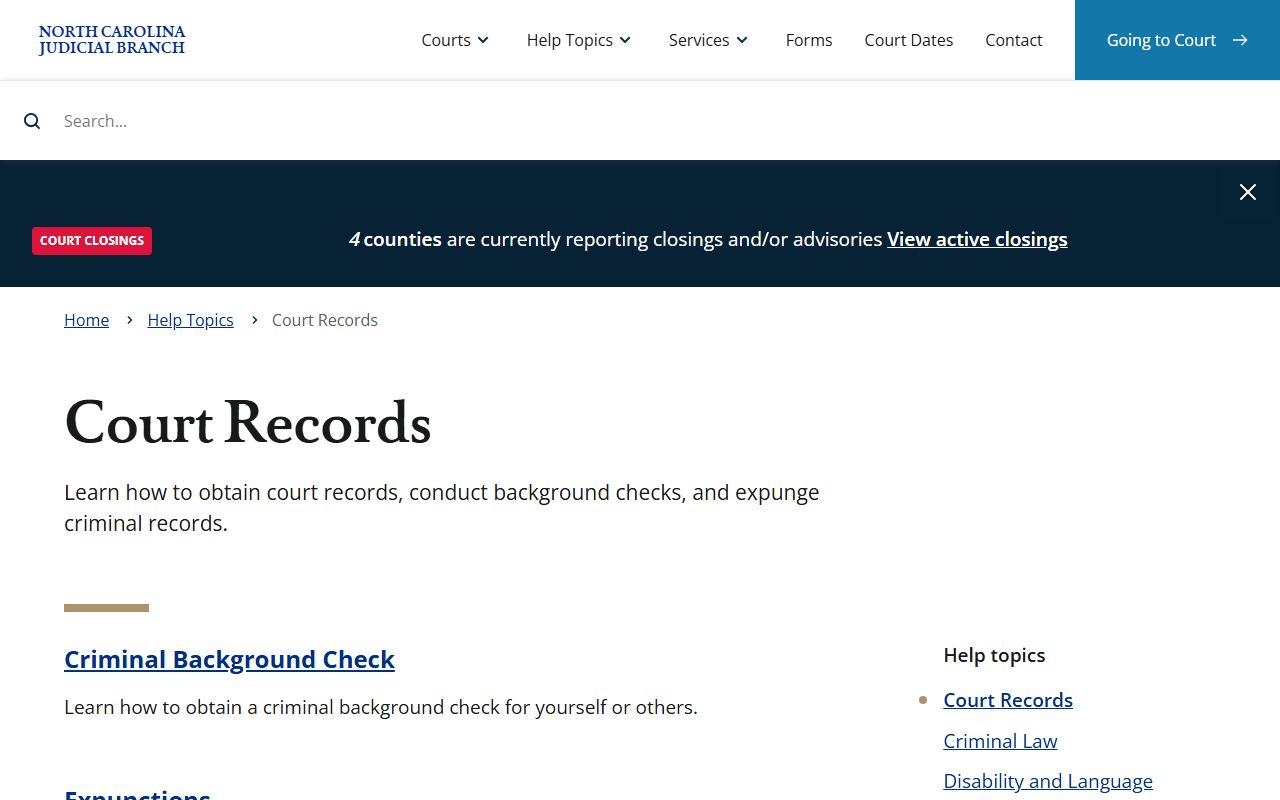
The court records help page on the Judicial Branch site explains what types of records are available and how to request them in North Carolina.
Note: Traffic court records in North Carolina are kept for three years for infractions, while misdemeanor records are retained for five to ten years.
Search Traffic Court Records Online
The fastest way to find traffic court records in North Carolina is through the eCourts system. Go to nccourts.gov/services to start your search. The portal is free. It runs at all hours. You can search by the name on the citation, the case number, or the county where the ticket was issued. Basic case data shows up right away, including the charge, court date, and current status of the case in North Carolina.
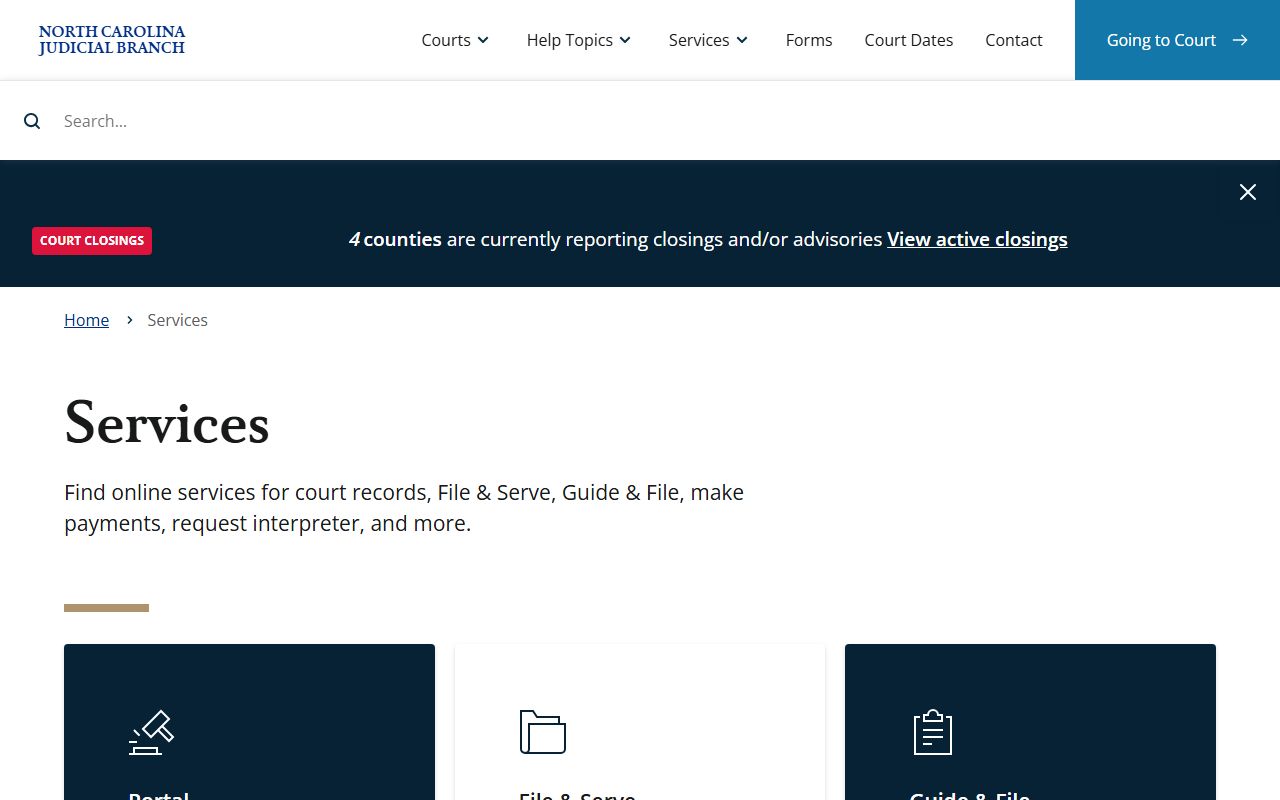
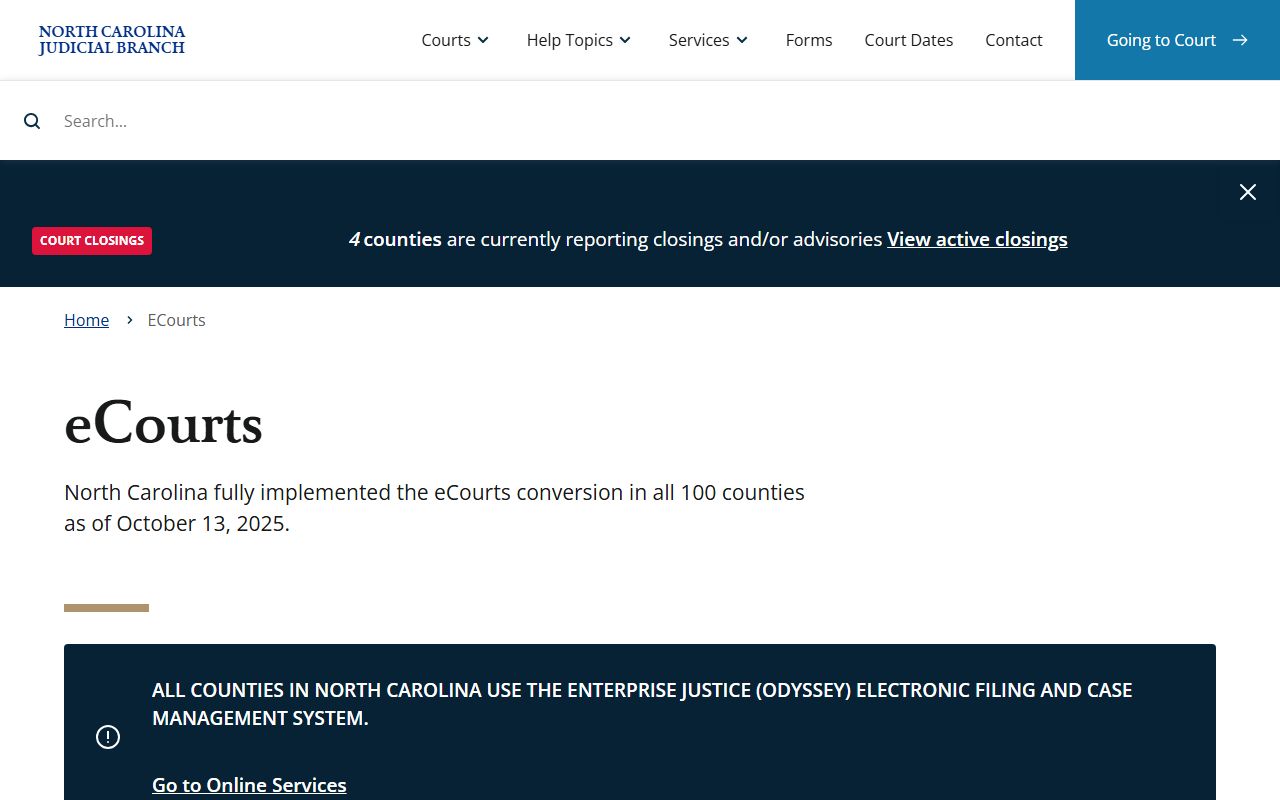
The eCourts system is part of a broad modernization effort by the North Carolina courts. It brought electronic filing, online payments, and digital record access to all 100 counties. The eCourts rollout has made it much simpler to find traffic court records without going to the courthouse. The Remote Public Access program also gives real-time court data to approved users across the state.
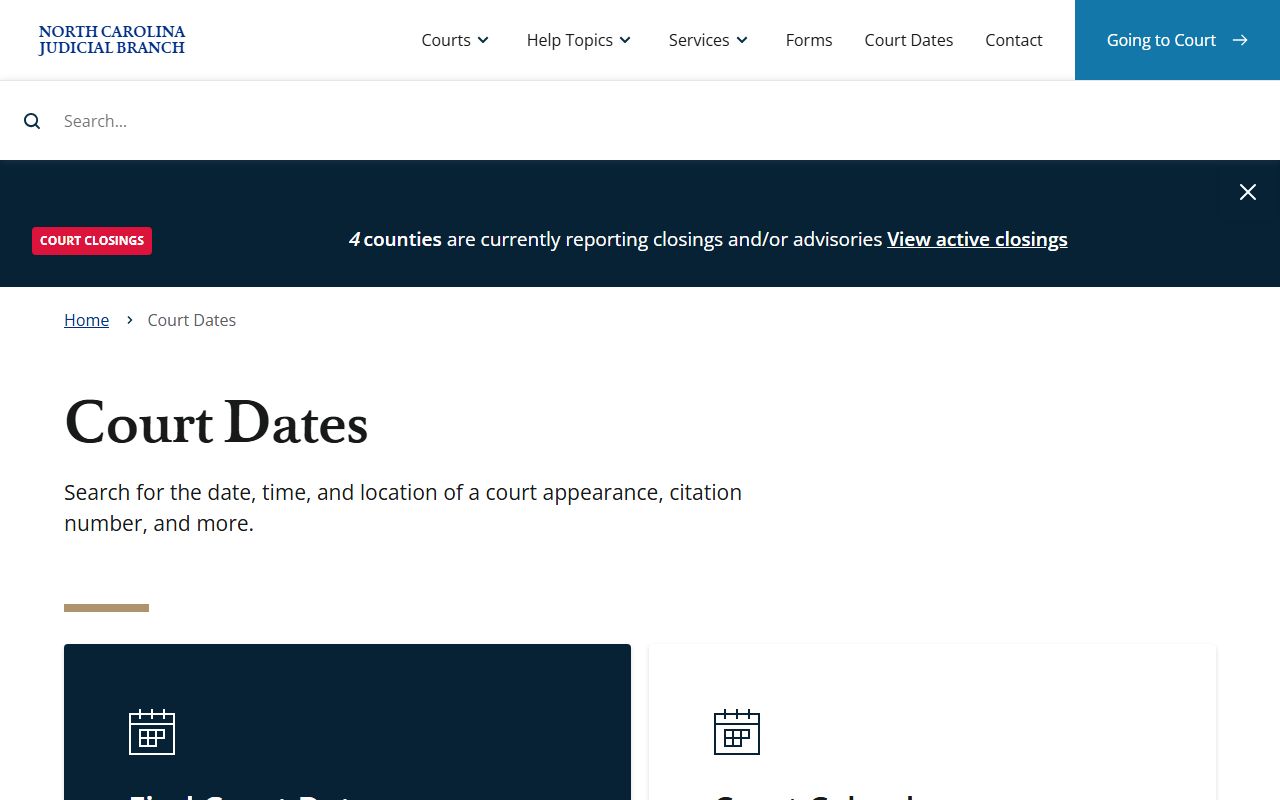
You can also use the Court Dates search portal to look up scheduled hearings. This tool lets you search by name, citation number, or county. It shows the date, time, and courtroom for upcoming traffic court hearings.
Note: The eCourts portal shows case status and basic details, but you may need to contact the county clerk for copies of full traffic court records in North Carolina.
North Carolina eCourts and Traffic Records
The eCourts system changed how North Carolina handles traffic court records. Before eCourts, you had to visit the courthouse or call the clerk to get case details. Now, much of that data is online. The system supports electronic filing, which means attorneys and some parties can submit documents without going to court. It also lets people pay fines and court costs online.
Payment for traffic tickets in North Carolina is not made to the officer who wrote the citation. All payments go to the Clerk of Superior Court in the county listed on the ticket. The clerk does not accept personal checks. You can pay with a money order, bank check, or cash if you go in person. Online payment through eCourts is also an option for many traffic cases. When you pay a traffic ticket, that payment counts as an admission of guilt and will appear in your traffic court records.
Court costs for traffic infractions in North Carolina are $193. Other criminal traffic charges carry costs of $191. These amounts are set by the state and apply across all 100 counties.
NC Traffic Violations and Citations
Traffic violations in North Carolina fall into several groups. Infractions are the most common type. These include speeding, running a red light, and failing to stop at a sign. More serious offenses like reckless driving or driving while impaired are charged as misdemeanors or felonies. Each type creates a different kind of traffic court record in North Carolina. The traffic violations page on the Judicial Branch site explains the different types of charges and what to expect in court.
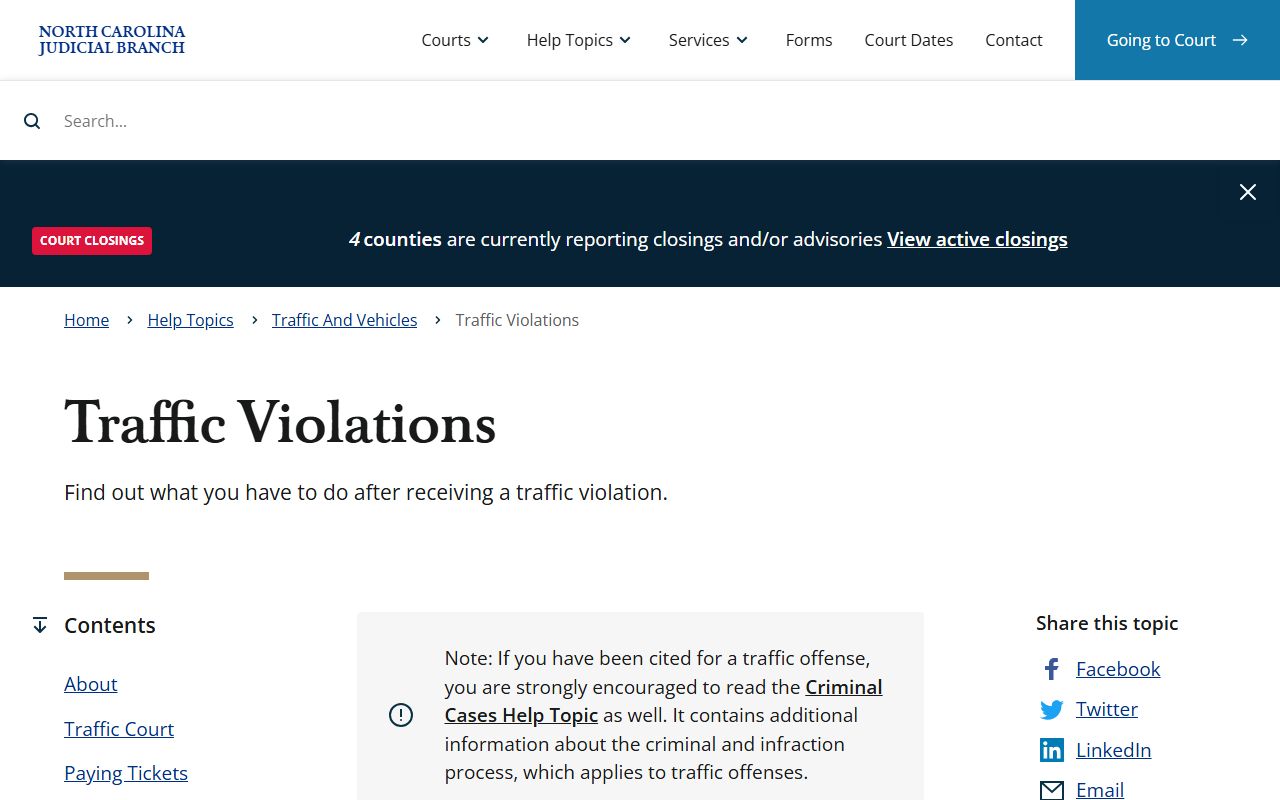
The Conference of Chief District Court Judges sets which charges can be paid without a court appearance in North Carolina. For these payable offenses, you can simply pay the fine and court costs. The case is then closed. Your traffic court record will show a conviction for that offense. If you choose to go to court instead, a judge will hear the case. The outcome is then recorded in the court file.
The North Carolina State Highway Patrol issues many traffic citations across the state. However, the Highway Patrol does not keep a database of tickets. If you lose your ticket, you need to contact the Clerk of Court in the county where it was issued. You can also call the Administrative Office of the Courts at (919) 792-4000 for help finding your traffic court records in North Carolina.
NC DMV Points and Driving Records
The North Carolina DMV tracks points on your driving record based on traffic court convictions. Each conviction adds points. If you get 12 points in three years, the DMV will suspend your license. The point system works alongside traffic court records to track your driving history in North Carolina.
Points vary by offense. Here is how the North Carolina point system works for common violations:
- 1 point for littering from a vehicle
- 2 points for most moving violations
- 3 points for running a red light or stop sign
- 4 points for reckless driving
- 5 points for passing a stopped school bus
Drivers with 7 or more points can attend a Driver Improvement Clinic to lower their point total. The hearing fee is $40, and the clinic itself costs $83.50. Completing the clinic removes 3 points from your record. This can help you avoid a license suspension. The DMV also revokes your license if you fail to appear in court or fail to pay a traffic fine. That failure shows up in both your DMV record and your traffic court records.
Note: DMV driving records and traffic court records are kept by different agencies in North Carolina, so you may need to check both for a complete picture.
NC Traffic Court Forms
The North Carolina court system has more than 1,120 official judicial forms. Many of these relate to traffic cases. You can find all forms on the court forms database at nccourts.gov. Forms cover everything from traffic ticket responses to motions for reduced charges. They are free to download. Each form has instructions to help you fill it out correctly.
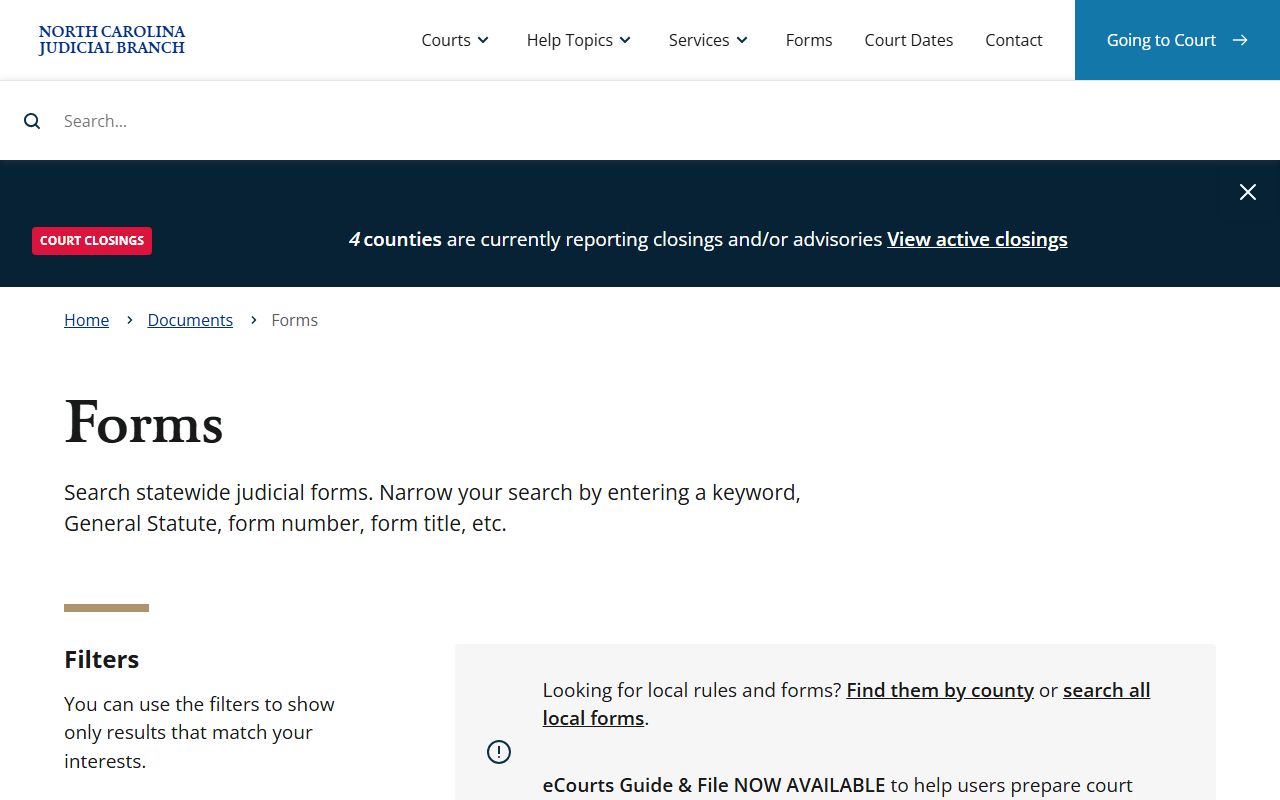
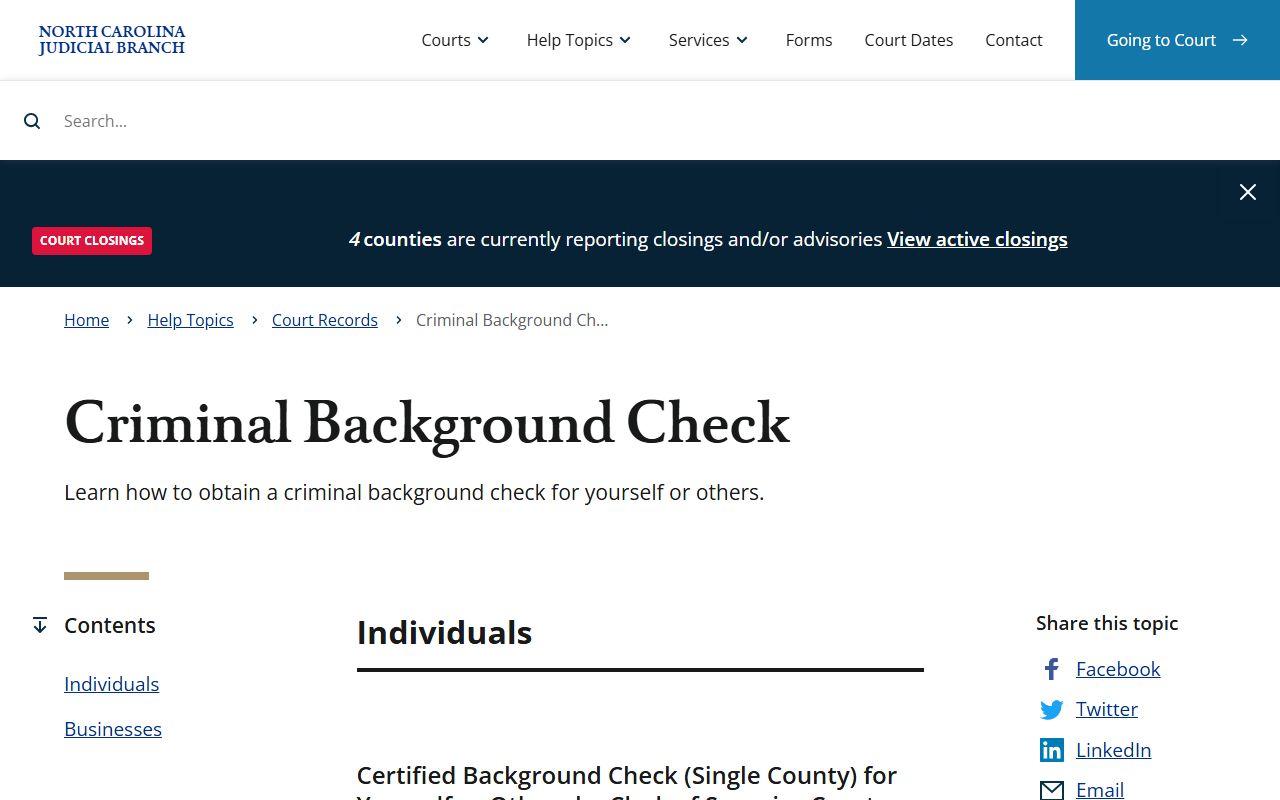
If you want to request a criminal background check that includes traffic court records, use Form AOC-CR-314. The fee for this check is $25. The criminal background check page explains the process. The North Carolina State Bureau of Investigation also provides statewide criminal record searches that may include serious traffic offenses.
Expunging Traffic Court Records
North Carolina law allows some traffic court records to be expunged. Expunction is the legal process of removing a conviction from your record. Not all traffic offenses qualify. The rules depend on the type of charge, the outcome, and how much time has passed. The expunctions page on the Judicial Branch site has details on which cases may be eligible in North Carolina.
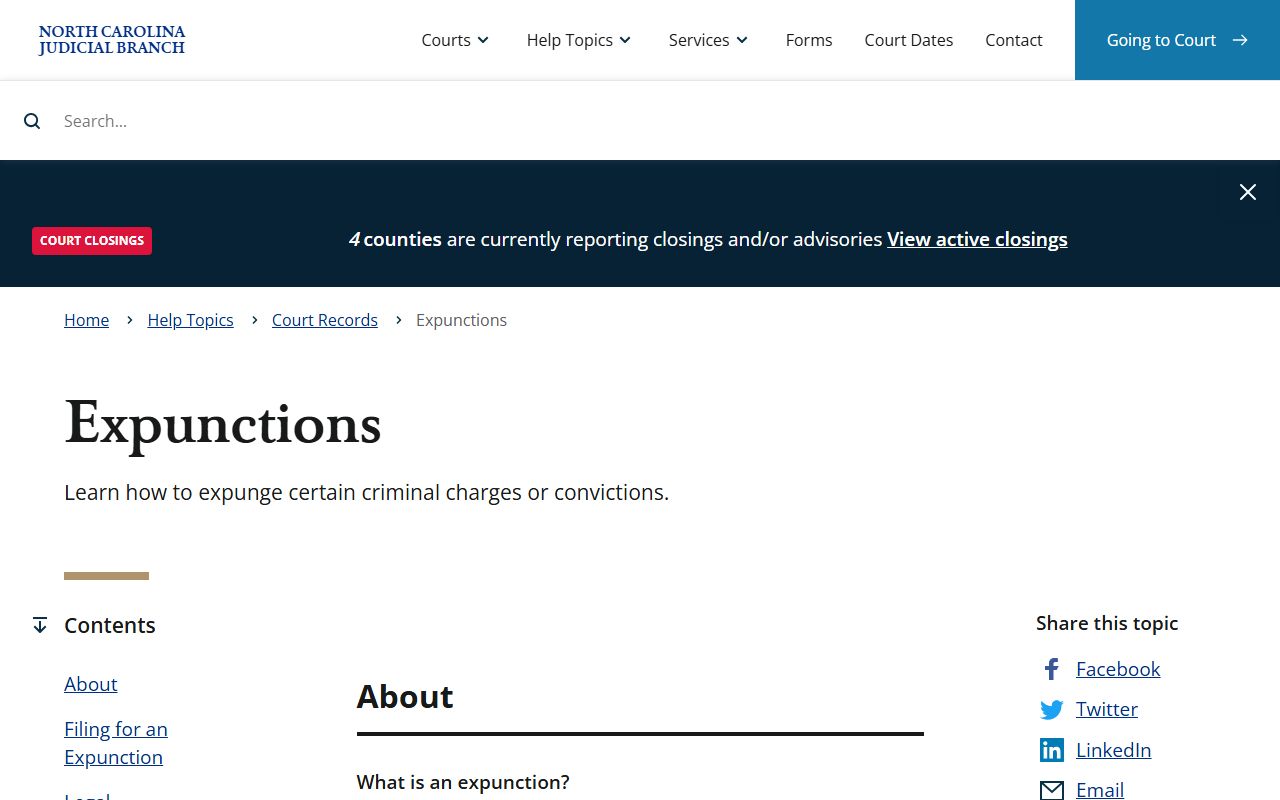
The filing fee for an expunction petition is $175 in North Carolina. You must file in the county where the case was heard. The process takes time. A judge reviews the petition and decides if the record should be sealed. If the expunction is granted, the traffic court record is removed from public view. This means it will not show up in most record searches. Many people seek expunctions to clear old traffic court records that affect their driving history.
Public Traffic Court Records Access
Yes. Traffic court records are public in North Carolina. The North Carolina Public Records Act, N.C.G.S. Chapter 132, gives all citizens the right to access government records. This includes traffic court records held by the Clerk of Superior Court. You do not need to be part of the case. Anyone can request these records from any county clerk's office.
Some details are kept private. Social Security numbers, bank account numbers, and certain personal data are redacted from public copies of traffic court records in North Carolina. The Driver Privacy Protection Act, N.C.G.S. 20-43.1, also limits what personal data from motor vehicle records can be released. Record retention rules under N.C.G.S. 7A-109 set how long courts must keep traffic case files. Traffic infraction records stay on file for 3 years. Misdemeanor traffic records are kept for 5 to 10 years. Felony traffic records are stored permanently in North Carolina.
The North Carolina Department of Administration directs people to the Judicial Branch for court records. The court records section on nccourts.gov is the best starting point for any search of traffic court records in the state.
Note: While most traffic court records are open to the public in North Carolina, expunged records and certain sealed cases will not appear in search results.
NC Traffic Records Resources
Several online tools can help you find traffic court records in North Carolina. The State Records traffic page offers a searchable database of public traffic records from across the state. This site pulls data from multiple sources and puts it in one place.
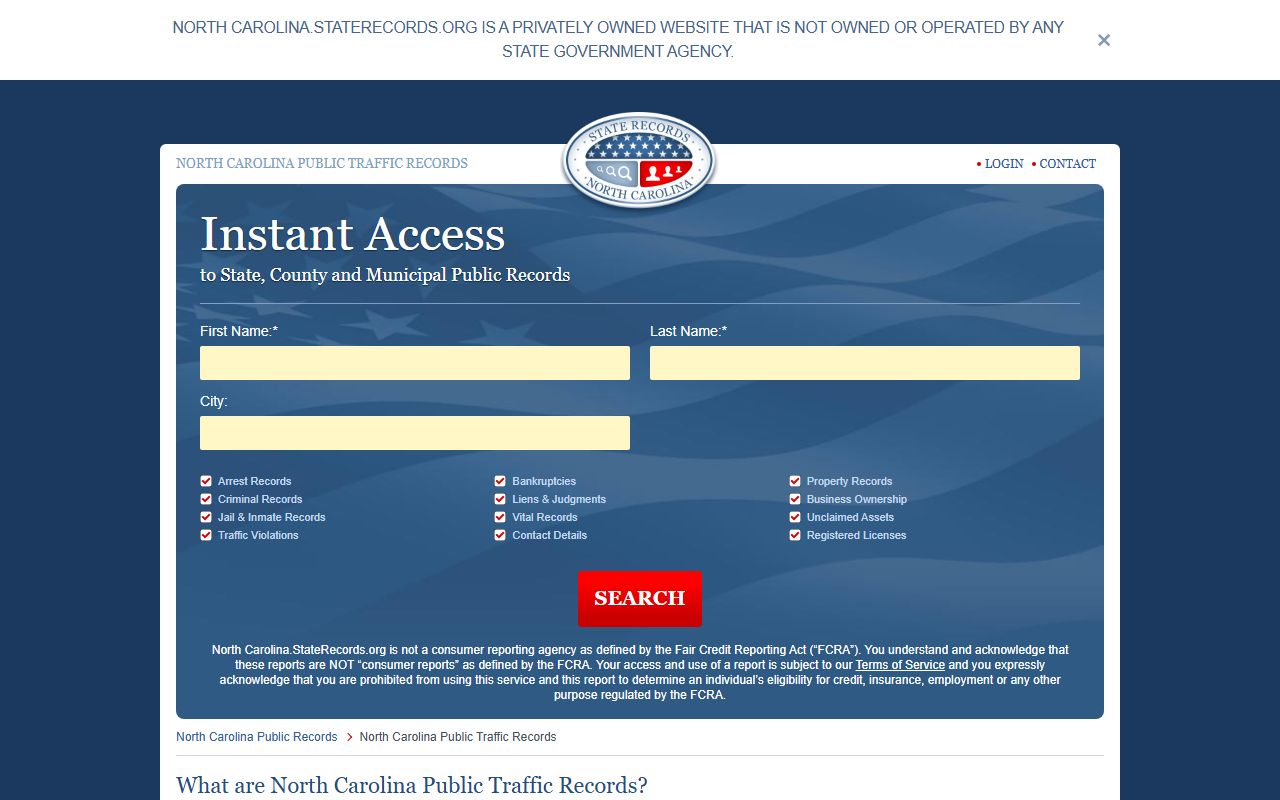
For the most accurate and up-to-date traffic court records, the official source is always the Clerk of Superior Court in the county where the case was filed. Online tools are helpful for quick searches, but the clerk's office is the keeper of the official record in North Carolina. When you need certified copies of traffic court records for legal purposes, the clerk is the only source that can provide them.
Traffic Court Records by County
Each county in North Carolina has its own Clerk of Superior Court that keeps traffic court records. Pick a county below to find local contact info and resources for traffic court records in that area.
Traffic Court Records by City
Residents of major cities handle traffic cases at their county courthouse. Pick a city below to learn about traffic court records in that area.